An air conditioner can be serviced regularly and still have a dirty coil.
The filter gets cleaned, the exterior is wiped down, and the unit returns to operation. Meanwhile, dust mixed with oily contamination may remain between the fins, restricting the surfaces that exchange heat with the air.
Working with an AC coil cleaning chemical manufacturer helps maintenance teams address that contamination with chemistry suited to the equipment, rather than treating every coil with the same strong cleaner.
Why dirt on a coil deserves attention
An AC coil depends on contact between air and its heat transfer surfaces. Deposits on those surfaces can interfere with airflow and heat exchange, making cleanliness part of equipment maintenance rather than a cosmetic concern.
The contamination varies by location. An outdoor condenser may collect roadside dust and airborne debris. An indoor unit near a commercial kitchen may carry greasy deposits that ordinary water washing struggles to remove.
Those are different cleaning jobs, even when both coils look equally dirty.
What the cleaning chemical needs to do
A suitable coil cleaner helps loosen and remove the actual soil present. Its formulation must also respect aluminium fins, copper tubes and any protective coating on the assembly.
Aggressive cleaning can create a misleading result: the surface looks brighter, but the treatment may have affected the metal or coating. Brightness alone is therefore a poor measure of successful cleaning.
Foam can make application easier to observe, but a thick foam blanket does not prove that contamination has been removed from deeper sections of the coil.
The useful result is a properly cleaned coil with an acceptable surface condition.
The method matters as much as the formulation
Imagine a coil carrying a mixture of loose dust and sticky grease. Applying chemical without first dealing with accessible loose contamination may create unnecessary work. Equally, spraying only the visible face may leave deposits further inside.
Cleaning effectiveness depends on access, application, contact conditions and any required rinsing. Excessive water pressure can bend fins, while incomplete drainage can leave moisture or residue where it is unwanted.
Evaporator and condenser coils also need different consideration. Indoor equipment introduces occupied spaces, condensate drainage and nearby electrical parts. A product described as no rinse should only be used under the conditions its instructions specify.
Equipment manufacturer guidance remains the starting point for the maintenance procedure.
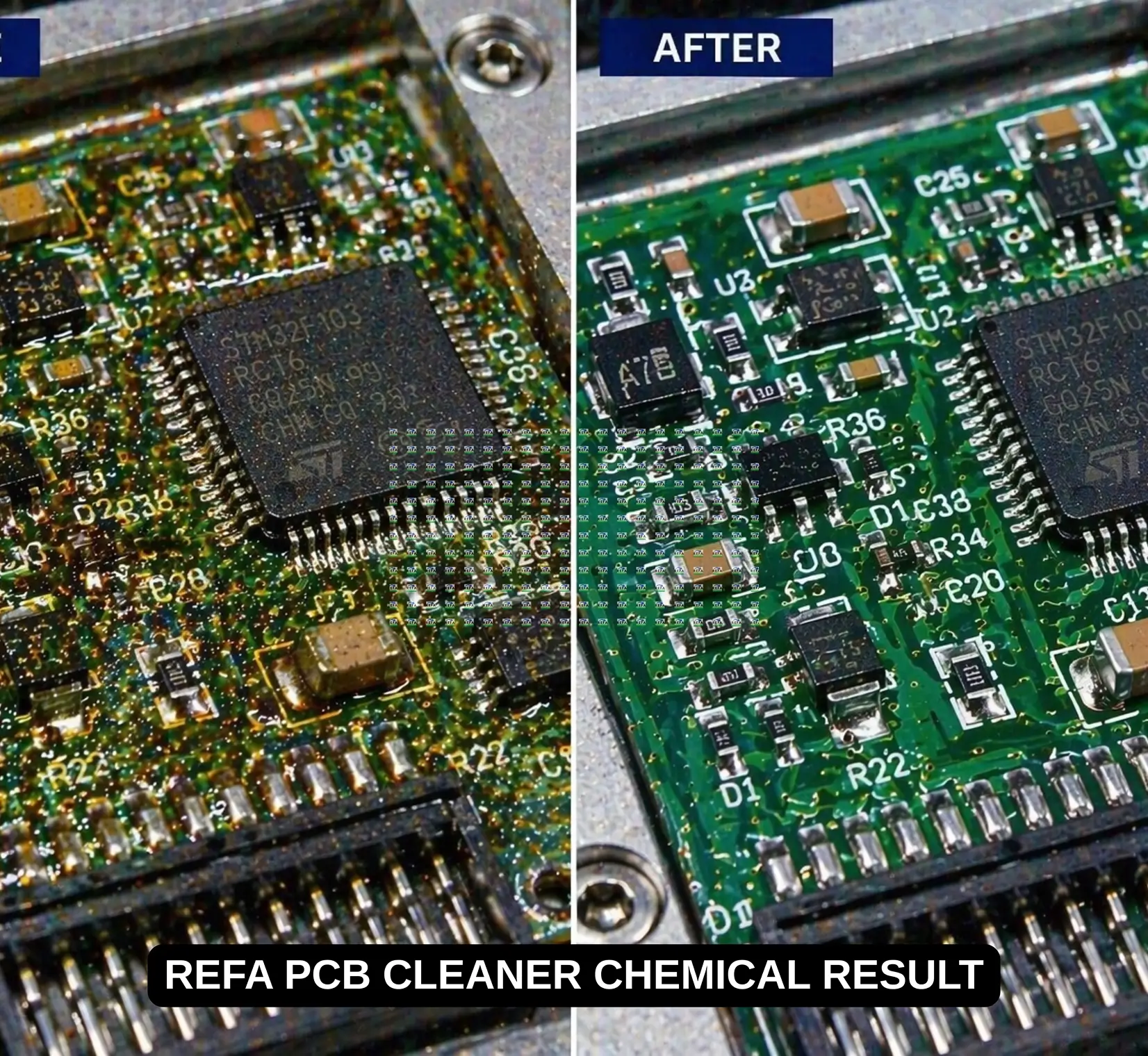
For maintenance teams, documenting the coil condition before and after cleaning also helps distinguish a contamination problem from a mechanical fault that needs further investigation.
Frequently asked questions
Can a general degreaser clean an AC coil
Only when the specific formulation is suitable for the coil materials and intended use. General cleaning strength does not establish compatibility with fins or coatings.
Will coil cleaning solve every cooling problem
No. It addresses contamination. Refrigerant problems, defective fans and control faults need separate diagnosis, so fixed performance improvements should not be assumed.
Discuss your coil cleaning application with REFA
At REFA Chemical Industries Pvt. Ltd., we approach industrial cleaning through the relationship between contamination, surface material and cleaning method.
For an AC coil cleaning enquiry, share the unit type, coil construction, coating details and contamination photographs. Explain whether the equipment serves an office, kitchen or industrial area so the application can be reviewed properly.
Connect with REFA in Greater Noida, Uttar Pradesh, at refachemical.com to discuss suitable cleaning chemistry and a controlled application trial.