A cooling tower can contain clear water and still have contamination growing on its surfaces.
That is why judging the system by appearance can be misleading. Slime and deposits may develop in the basin, on fill or in poorly circulated areas before operators notice a visible change in the circulating water.
A cooling tower biocide manufacturer contributes to microbial control by supplying suitable chemistry. Lasting control, however, also depends on how the cooling system is operated and maintained.
Why microbial growth becomes an operating concern
Cooling towers bring water into contact with air while removing heat. Along with changing operating conditions, they encounter environmental contamination that can become part of the recirculating system.
Microorganisms can attach to surfaces and form biofilm. Once contamination is established within deposits, controlling it may become more difficult than treating organisms suspended in the water.
The practical concern extends beyond a dirty basin. A tower needs a managed approach to microbial control, with appropriate monitoring and maintenance throughout operation.
What a cooling tower biocide does
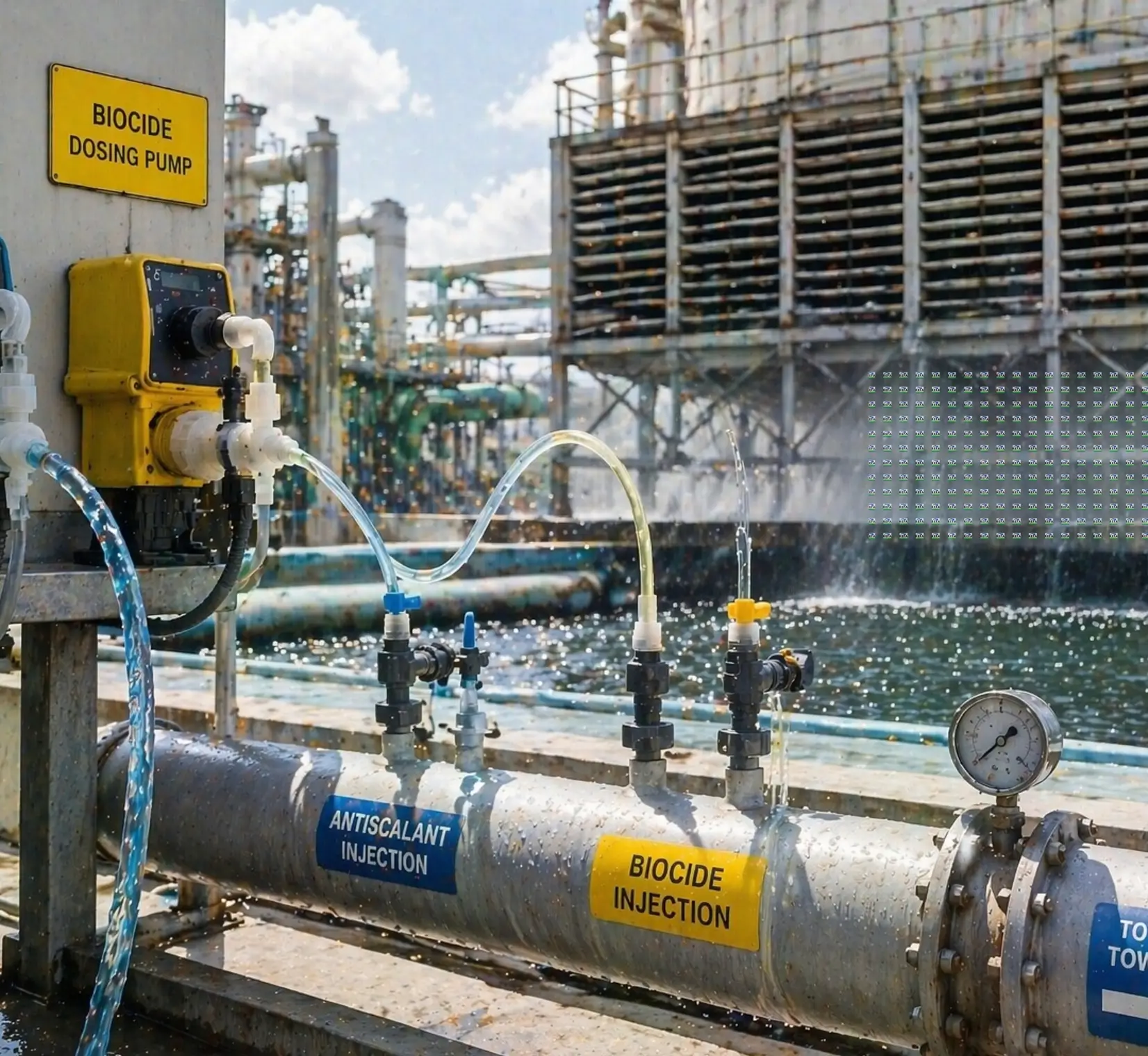
Biocides are used to control microbial contamination under specified application conditions. Oxidising and nonoxidising products work differently and need to be selected around the water chemistry, system materials and treatment objectives.
There is no useful universal dose for every tower. The concentration achieved in the circulating water, its distribution and the required contact conditions matter more than the apparent strength of the product in its container.
A treatment programme should explain how performance will be monitored and what operators must do when conditions move outside the established limits.
Why the same problem can keep returning
Consider a tower where slime returns soon after chemical treatment. Increasing the dose may appear to be the obvious answer, but the cause could include accumulated sediment, poor circulation or areas that remain stagnant.
CDC cooling tower guidance identifies sediment and biofilm, temperature, water age and disinfectant residual as important factors in Legionella control. This reinforces a practical point: chemical treatment must be connected to system management.
Dosing equipment can be running correctly while the overall control programme still needs attention.
Cleaning, inspection and suitable scale and corrosion management support the programme. A biocide should not be expected to compensate indefinitely for deposits or neglected maintenance.
Shutdown periods deserve particular attention. A system left wet with limited circulation needs an appropriate management plan, rather than being forgotten until cooling demand returns.
Frequently asked questions
Does clear water mean microbial growth is controlled
No. Visual appearance does not establish microbiological condition. Appropriate monitoring and an understanding of the system’s operating history are needed.
Can one biocide schedule work throughout the year
Conditions can change with production load, water quality and shutdown periods. The programme should be reviewed when those conditions change, following product guidance and professional assessment.
How REFA supports cooling water treatment applications
REFA Chemical Industries Pvt. Ltd. includes biocide applications within its water treatment portfolio. Our approach begins with the cooling system and its operating conditions, rather than recommending chemistry from a capacity figure alone.
Share the tower details, water analysis, existing treatment programme and recurring problems with our technical team. This information helps frame the chemical recommendation and the monitoring discussion.
Contact REFA in Greater Noida, Uttar Pradesh, through refachemical.com to discuss your cooling tower biocide requirement and an application specific evaluation.