
A printing defect can begin with residue left inside a stencil aperture.
The stencil may look clean across its broad surface while small amounts of paste remain around aperture walls. When printing resumes, those overlooked areas can affect how consistently paste transfers onto the board.
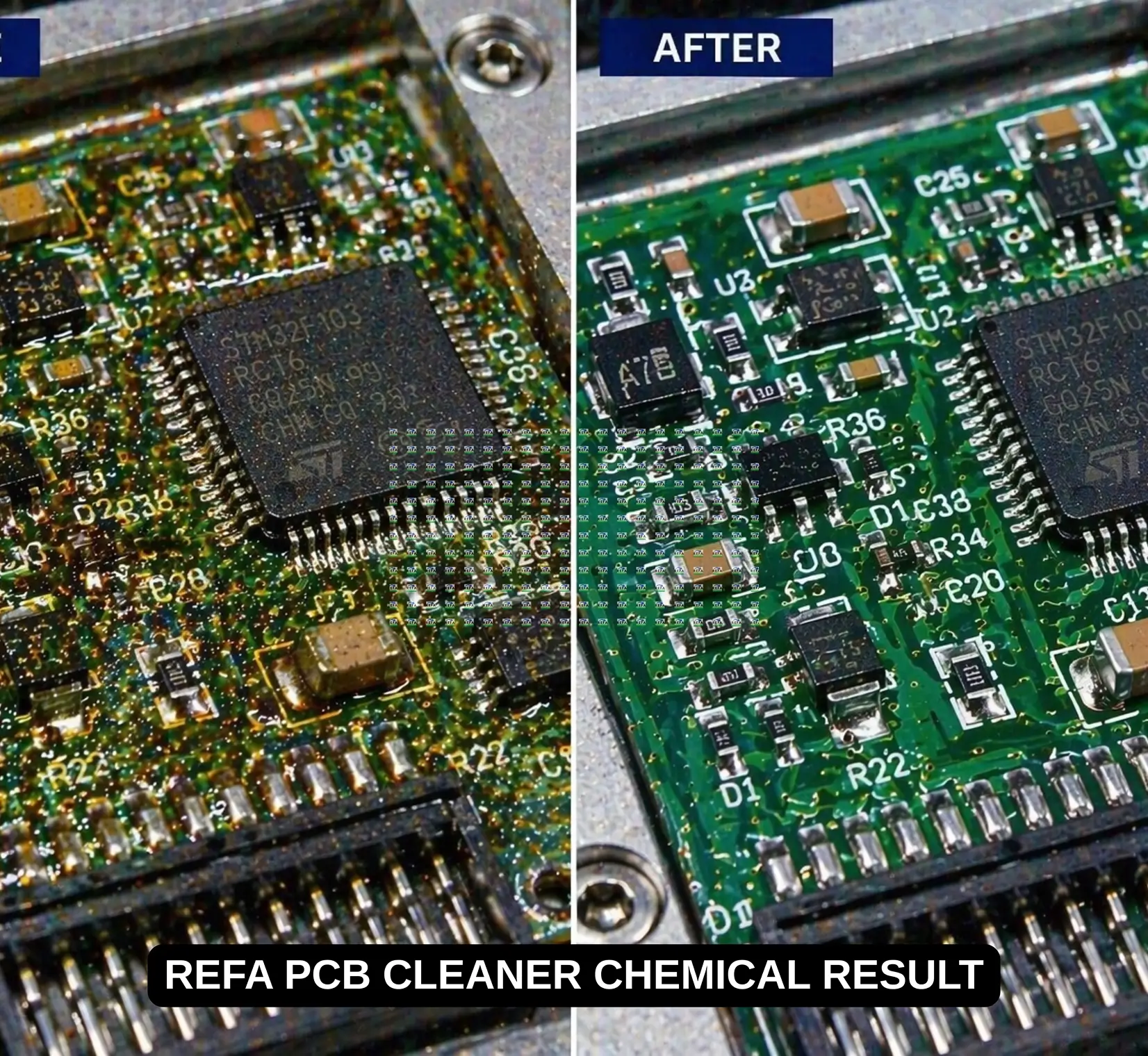
An SMT stencil cleaning chemical manufacturer helps address this contamination through chemistry matched to the paste, stencil construction and cleaning method. The objective is to support repeatable printing, rather than simply produce a shiny foil.
Why stencil cleaning is part of process control
Solder paste combines materials that must be removed effectively from fine openings. Paste left on a stencil can change condition over time, making cleaning behaviour different from that of freshly deposited material.
Aperture geometry also influences access. A fluid that removes visible paste easily may still need the right application conditions to clean smaller or more demanding features.
This is why a successful wipe across an open surface cannot establish performance for the entire stencil.
Online wiping and offline cleaning are different jobs
Understencil wiping during production works within the printer’s operating cycle. Offline cleaning handles a separate cleaning task, often with different equipment, fluid contact and drying conditions.
A formulation suitable for one method should not automatically be transferred to the other. Printer compatibility, fluid delivery and the intended cleaning sequence all matter.
Misprinted boards introduce another distinction. Their solder mask, surface finish and any existing components require separate consideration, even when the unwanted material is the same solder paste.
Cleaning a stencil successfully does not prove that the same process is suitable for a board.
What influences cleaning performance
The solder paste identity is a useful starting point because flux systems differ. Stencil material, coatings, frame adhesives and equipment seals also belong in the compatibility review.
During cleaning, the fluid must remove contamination without leaving an unacceptable residue of its own. The stencil then needs the appropriate drying condition before it returns to use.
If results deteriorate, the reason may include paste loading, dirty cleaning fluid, filters or wiping materials. Increasing chemical consumption can hide these issues without resolving them.
An effective trial therefore looks at the cleaned apertures and subsequent printing behaviour. Recording the cleaning conditions makes that result easier to reproduce across shifts and production batches.
It also creates a useful reference when paste, wiping materials or stencil design changes and the line needs to investigate a new printing problem.
Frequently asked questions
Can isopropyl alcohol clean every solder paste
No universal assumption is reliable. The paste formulation and cleaning method determine whether a fluid removes contamination effectively and leaves an acceptable surface.
How should stencil cleaning be checked
Inspect representative apertures using the established process criteria, then assess printing after cleaning. General appearance alone provides an incomplete picture of the result.
Discuss your SMT cleaning application with REFA
REFA Chemical Industries Pvt. Ltd. serves electronics related cleaning applications. For stencil cleaning requirements, we begin with the paste system and the way cleaning is performed.
Share the stencil details, solder paste specification and equipment model with our technical team. Confirm whether the requirement concerns online wiping, offline stencil cleaning or misprinted boards so the available formulation can be evaluated against the correct task.
Visit refachemical.com to contact REFA in Greater Noida, Uttar Pradesh, and discuss an application specific SMT stencil cleaning trial.